Ergo & Blockchain: Tokenomics e Finanza
5 novembre 2021
Il seguente articolo esaminerà aspetti fondamentali delle criptovalute, della finanza decentralizzata (DeFi), della tokenomics e del percorso del Protocollo Ergo. Per il primo episodio della serie Ergo & Blockchain, si prega di consultare Ergo & Blockchain: Cryptocurrency Sphere.
Crypto, Blockchain e Finanza
Le criptovalute si basano sulla tecnologia del registro distribuito per mantenere dati rilevanti sulla blockchain. Un database decentralizzato è composto dai nodi che trasportano le informazioni, come il numero di portafogli, token, nodi e la funzione di contratti specifici memorizzati sulla blockchain. Con l'accettazione crescente della Finanza Decentralizzata (DeFi), è importante prepararsi a un nuovo design economico funzionante.
Quando Satoshi Nakamoto ha creato qualcosa di nuovo (Bitcoin) in opposizione alle istituzioni finanziarie tradizionali, si pensava fosse un progetto hobbistico di uno sviluppatore anonimo. Spesso si pensava fosse uno scherzo o una truffa avviata per sottrarre denaro alle persone. Avanzando fino ad oggi, Bitcoin è ora riconosciuto come moneta a corso legale e sta guadagnando accettazione tra le aziende finanziarie. Ciò che un tempo si pensava fosse "denaro che viene dal nulla" si è trasformato in qualcosa di molto più che tocca sempre di più la vita quotidiana.
La rilevanza di questo è che la valuta, sotto forma di dati, è supportata dalla potenza di calcolo che è il risultato dell'esecuzione di attrezzature di mining e elettricità. Gli utenti pagano commissioni ai miner per la verifica delle transazioni e i miner ricevono ricompense extra dal protocollo per fornire sicurezza. Questo è chiamato modello di consenso Proof of Work (PoW) su cui sono costruiti Bitcoin, Ethereum e Monero. Un altro modello è chiamato Proof of Stake (PoS). Nel PoS, il consenso è deciso dalla quantità di token staked piuttosto che dalla potenza di hash dei miner. Ci sono diversi attori (Miner/Staker) e vettori di attacco (attacchi 51/66/33%) che questi due modelli di consenso fondamentali rappresentano.
Modelli di Lancio PoW e PoS
Essendo il pioniere dei sistemi PoW, Bitcoin non ha avuto un'offerta iniziale di monete (ICO) ma ha invece avuto un lancio equo in cui chiunque poteva minarlo con il proprio hardware. Ethereum, d'altra parte, ha pre-minato determinate allocazioni (di monete) per il team e il finanziamento dell'ecosistema e ha condotto un ICO prima che iniziasse il mining. Entrambi i modelli di lancio hanno caratteristiche diverse in termini di allocatori. Nel PoS, la fondazione detiene la stragrande maggioranza dei fondi nella fase di lancio e gli investitori possono ottenere monete nell'ICO o acquistarle nei mercati secondari. Possono anche esserci round di pre-vendita aperti principalmente per i Venture Capitals (VC). Nel PoW, l'unico modo per ottenere le monete è minare o acquistare nel mercato secondario da un venditore.
Ergo ha scelto il modello PoW con un lancio equo e ha progettato un'allocazione del tesoro per lo sviluppo dell'ecosistema come parte delle ricompense di blocco. Invece di offrire una parte dell'allocazione pre-minata, il Protocollo Ergo ha allocato 7,5 ERG per 75 ERG di ricompense di blocco come allocazione del tesoro per i primi due anni. L'allocazione del tesoro poi scende a zero nei sei mesi successivi. Questo piano ha fruttato al tesoro 4,33 milioni di ERG, che rappresentano il 4,43% dell'offerta totale di 97 milioni di ERG. Questa allocazione è stata istituita per supportare lo sviluppo iniziale dell'ecosistema rilasciando fondi gradualmente durante lo sviluppo del progetto. Ergo è stato lanciato a luglio 2019, quindi il tasso di emissione ha già iniziato a diminuire da luglio scorso.
Nel lancio del modello PoS, c'è spesso una certa quantità di allocazione della fondazione/team e generalmente c'è anche l'allocazione VC nella pre-vendita. Queste allocazioni possono essere vestite linearmente o sbloccate al lancio e gli investitori possono ottenere monete in un ICO o nei mercati secondari. Poiché queste proporzioni possono raggiungere numeri enormi o talvolta più del 50%, significa che il team principale ha la liquidità e quindi il potere di market-making nelle fasi iniziali. Dato che i prezzi ICO sono solitamente un paio di volte più alti rispetto ai round di pre-vendita, gli investitori al dettaglio avranno una posizione svantaggiata rispetto ai VC.
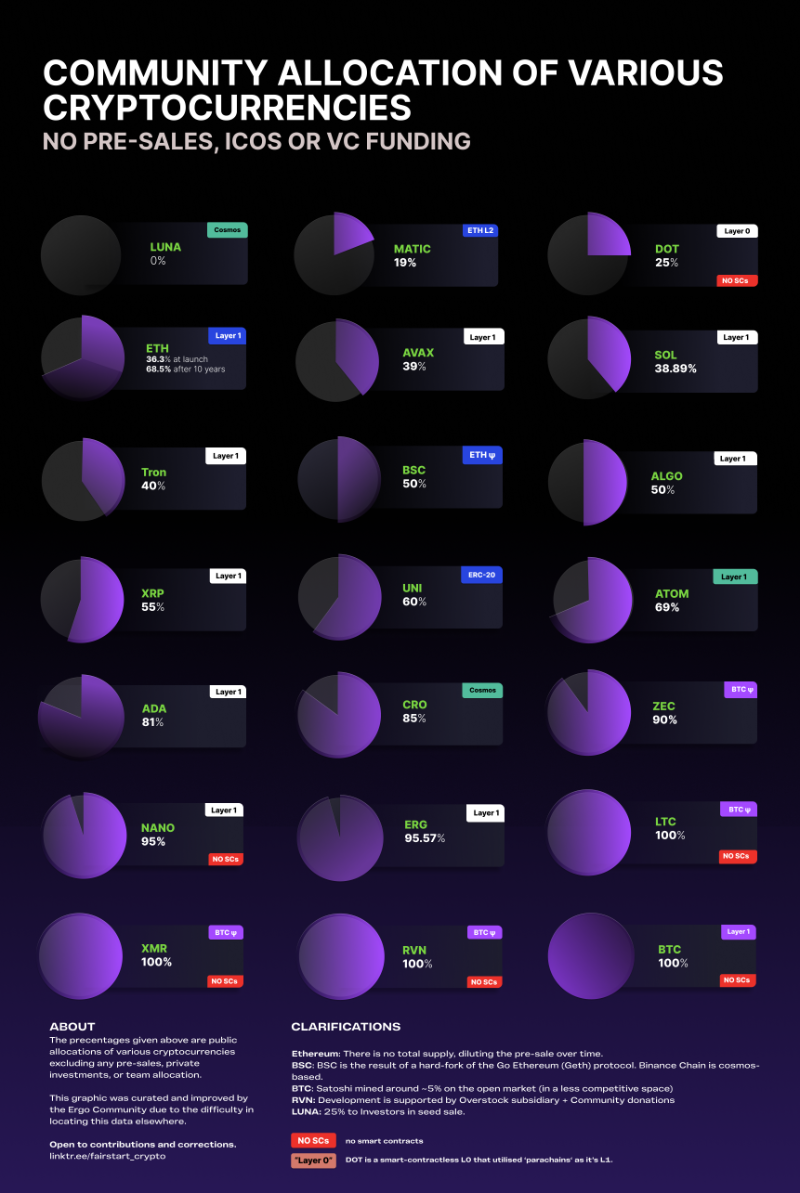
Di seguito è riportata un'infografica che mostra un confronto delle allocazioni di token per vari progetti
Tokenomics
La tokenomics, o economia dei token, è il fattore chiave che separa le criptovalute dalle valute fiat. Le politiche monetarie tradizionali sono definite da istituzioni e sono sempre soggette a cambiamenti da parte delle stesse istituzioni. La tokenomics, d'altra parte, è scritta sulla blockchain e non può essere cambiata senza raggiungere un consenso per farlo.
Le valute fiat sono emesse dalle banche centrali e la loro circolazione è controllata da queste entità centralizzate. Come puoi immaginare, questo era necessario per prevenire frodi e fornire autenticazione nelle transazioni finanziarie. Con la tecnologia del registro distribuito, l'autenticazione viene eseguita da nodi decentralizzati e le transazioni sono verificabili sul registro pubblico. Bitcoin non aveva bisogno di una terza parte per dimostrare le transazioni sulla blockchain o di un'entità centrale per governare la sua politica monetaria.
Quindi, con l'inizio di Bitcoin, è stato creato un nuovo sistema monetario con 21 milioni di monete a cap di hard e un'emissione deflazionistica che dura per 140 anni a un tasso prevedibile. L'emissione di Bitcoin si dimezza ogni quattro anni, riducendo le ricompense di blocco che i miner raccolgono. Inizialmente, c'erano 50 BTC di ricompense per blocco, ma ora è stata ridotta a 6,25 dopo il dimezzamento del 2020. 18,6 milioni di Bitcoin sono già stati minati. Questo significa che l'88% dell'offerta totale è già in circolazione dopo 13 anni.
Alcune criptovalute come Ethereum o Monero non hanno forniture a cap di hard, ma invece è impostato un tasso di emissione decrescente e prevedibile. Secondo i dati al momento della scrittura, i tassi di emissione per Ethereum e Monero sono rispettivamente dello 0,54% e dello 0,96%. Possiamo calcolare il tasso di emissione per i prossimi 10 o 50 anni per prevedere l'inflazione futura secondo questo tasso di emissione. Puoi accedere ai tassi di inflazione di vari progetti su Messari nella pagina delle metriche/sotto la colonna dell'offerta.
Nei progetti PoS in cui i VC hanno un vantaggio iniziale, inevitabilmente, la maggiore partecipazione diventa più grande. I VC possono accumulare grandi somme di monete nella fase di pre-vendita a prezzi bassi e potrebbero iniziare a scaricare con il lancio dell'ICO. Se si attengono al loro investimento e non scaricano, potrebbero controllare la governance della blockchain in futuro. Poiché il consenso si basa sulla quantità staked, la maggior parte della circolazione sarà illiquida e controllata da grandi capitali.
Ergo ha un'offerta a cap di hard di 97 milioni di ERG, che sarà emessa in 8 anni. Il programma di emissione può sembrare aggressivo, tuttavia va notato che l'80% dell'offerta totale di Bitcoin è già stata emessa durante i suoi primi 8 anni e l'88% è in circolazione ad oggi. L'offerta circolante di ERG è di 45 milioni, rappresentando il 46% dell'offerta totale. Il resto dell'emissione dell'offerta sarà rilasciato nei prossimi sei anni prima che le ricompense del consenso PoW scendano a zero. Da quel momento in poi, il Storage Rent e le commissioni di transazione pagate dagli utenti forniranno incentivi economici per i miner per far funzionare le loro attrezzature.
Il protocollo di Ergo offre un altro incentivo economico per i miner, chiamato Storage Rent. Il componente Storage Rent è una proposta per eradicare i byte di dati non utilizzati (polvere) dalla blockchain. Ogni quattro anni, gli utenti dovranno pagare 0,13 ERG per ogni UTXO box non utilizzato. Monete non utilizzate o perse saranno estraibili e alla fine torneranno in circolazione. Questo è un impegno a garantire un flusso di cassa futuro e creare un'economia crittografica più liquida. Gli utenti possono semplicemente spostare le loro monete ogni quattro anni per evitare di pagare un affitto di archiviazione non necessario.
Trasformazione Sociale
La tecnologia blockchain e lo sviluppo di contratti intelligenti stanno avanzando a un ritmo sempre più veloce. Vediamo che nuove leggi vengono approvate a livello globale, le istituzioni finanziarie hanno iniziato ad allocare portafogli crypto e, proprio recentemente, la SEC ha approvato il primo fondo di scambio di Bitcoin sulla NASDAQ. Eppure c'è una forte opposizione all'istituzionalizzazione di Bitcoin e delle criptovalute. Chi controllerà i tuoi fondi in futuro? Le criptovalute possono davvero diventare uno strumento per le persone comuni contro le entità centralizzate?
Mentre le valute digitali delle banche centrali (CBDC) sono all'orizzonte, una scelta vitale si avvicina rapidamente. Come evolveranno le normative riguardo ai diritti di proprietà e alla privacy? Le blockchain e le criptovalute diventeranno lo strumento definitivo per la sorveglianza sociale?
Tieni d'occhio il prossimo capitolo di questa serie di articoli: Ergo & Blockchain: Privacy e Sicurezza.
Share post
13 agosto 2025

9 luglio 2025
12 maggio 2025




7 agosto 2022