Logica Off-chain e eUTXO
4 ottobre 2021
Vantaggi di eUTXO
C'è una differenza significativa tra i modelli account e eUTXO. Nel modello account, tutta la logica è on-chain, ma questo è stato trovato causa di problemi di scalabilità. Nel modello eUTXO, solo la validazione del contratto intelligente stesso viene eseguita on-chain, mentre altre parti del contratto intelligente sono off-chain.
Per chiarire questo, considera la parte off-chain come una scatola nera che legge lo stato della blockchain (UTXO), esegue tutti i calcoli e infine genera una o più tx (transazioni). Queste tx (risultati della parte off-chain) vengono quindi inviate alla blockchain per essere verificate.
La blockchain verifica le tx e se i requisiti delle tx sono soddisfatti, verranno estratte, cambiando così lo stato della blockchain (insieme UTXO).
Di conseguenza, solo la validazione del contratto intelligente viene eseguita on-chain e tutta la logica restante è off-chain. Questo significa che la validazione delle tx può essere incredibilmente efficiente e scalabile - un grande vantaggio del modello eUTXO.
Il problema della scalabilità è una delle principali ragioni per cui Ethereum sta cercando di spingere le transazioni verso soluzioni di scalabilità Layer 2/Sidechain governate da codice off-chain. In sostanza, le soluzioni che Ethereum sta esplorando per affrontare le sue preoccupazioni sulla scalabilità imitano il modello eUTXO nella pratica.
Per la maggior parte, c'è consenso nell'industria che la logica on-chain sia decentralizzata per natura e quindi superiore. E la logica off-chain? Può essere distribuita la logica off-chain?
In eUTxO, la logica off-chain può essere scritta all'interno di un intervallo che va da completamente centralizzata a completamente decentralizzata. Ad esempio, in ErgoMixer la parte off-chain è decentralizzata. La esegui sul tuo computer, ma gli utenti hanno anche la possibilità di eseguire la propria logica off-chain. La logica off-chain può essere distribuita o localizzata e eseguita da ciascun utente, variando quindi da centralizzata a ampiamente distribuita.
Soluzione Bot Distribuita ErgoDEX
ErgoDex ha testato e implementerà una soluzione bot che consente la distribuzione della logica offchain da eseguire in modo concorrente. Sebbene contraria all'uso della logica off-chain di Ergomixer (dove ogni utente esegue la propria logica off-chain individuale), i bot off-chain possono essere distribuiti e i bot-runner possono guadagnare una commissione di esecuzione. Questa commissione di esecuzione è simile a una commissione di transazione e sarà preimpostata prima che i fondi vengano inviati.
Questo incentiva gli attori a eseguire questi bot distribuiti, oltre a dare agli utenti chiarezza riguardo ai prezzi. In questo modo, ogni attore ha la stessa possibilità di guadagnare una parte della rete con incentivi economici. Il codice off-chain diventerà sempre più decentralizzato man mano che l'uso della piattaforma aumenta.
Le entrate aggiuntive create dagli utenti che eseguono bot sembrano integrarsi particolarmente bene in pool di mining più piccoli, così come in operatori di pool singoli in Cardano. È nostro obiettivo lavorare con queste parti fin dall'inizio per incoraggiare la decentralizzazione.
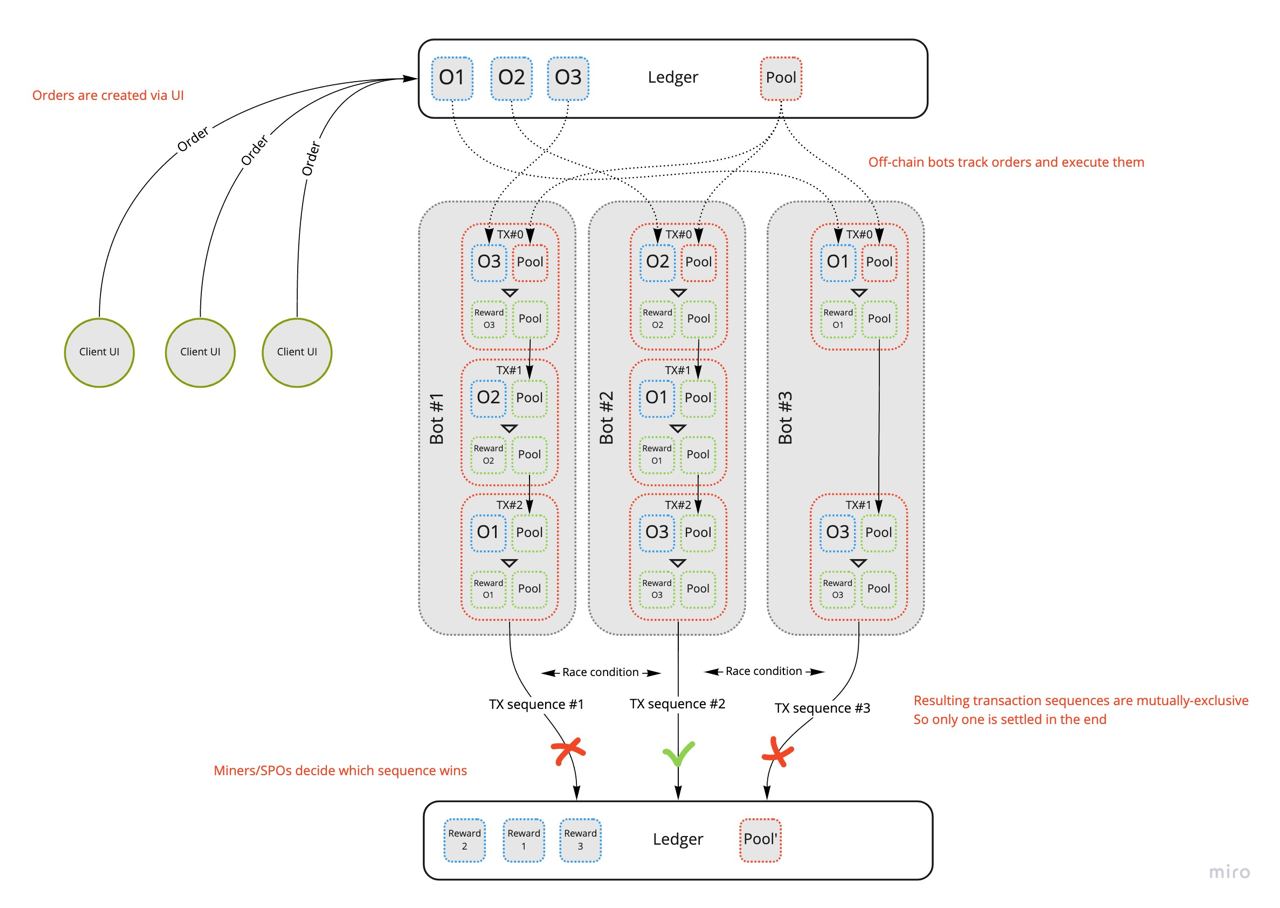
La decentralizzazione viene raggiunta a seconda del numero di attori che scelgono di eseguire bot off-chain. C'è anche un incentivo economico aggiuntivo per i miner a partecipare a questa soluzione, rispettando la fiducia e la trasparenza che la proof of work fornisce.
Assunzioni di eUTxO
Man mano che eUTxO continua a essere implementato, assisteremo a alcune dApp in cui la logica off-chain non è necessariamente decentralizzata. La domanda sarà se questo rappresenta un problema o meno? Dipenderà dalla funzione di ciascuna dApp unica e se gli utenti sono consapevoli delle assunzioni che devono fare. Queste dApp possono anche scegliere un modello che decentralizza o distribuisce la logica off-chain. Ma è necessario? La mia ipotesi è probabilmente no, a seconda della funzione della dApp.
La verifica delle transazioni sarà comunque on-chain, tuttavia gli incentivi potrebbero non essere in atto per incoraggiare gli utenti a eseguire questa logica in modo decentralizzato. Non vedo questo come un problema considerando che alcune dApp potrebbero essere per uno scopo speciale o fornire un servizio molto semplice.
Tuttavia, il modello eUTxO crea alcune assunzioni aggiuntive di cui gli utenti devono essere a conoscenza ed è per questo che Ergo è in procinto di mettere insieme l'iniziativa KYA (Know Your Assumptions).
Il KYA funzionerebbe in modo simile a un "Accordo di Termini e Condizioni" ed è
disegnato per informare gli utenti riguardo alla fiducia e alle assunzioni crittografiche di una blockchain, contratto, possibilità di aggiornamento, livello di controllo da parte dei protocolli, ecc.
L'obiettivo di un KYA sarebbe quello di prevenire rug pulls, truffe e proteggere gli investitori.
Per quanto riguarda la logica off-chain, comprendere il KYA è molto importante. Attualmente, gli utenti si fidano delle audit di sicurezza delle blockchain/dApp, ma un'audit certifica solo che la logica è intesa dal contratto. Un'audit non è una prova di sicurezza in tutti gli aspetti, solo la prova dell'intenzione di un contratto.
Ci deve essere un KYA riguardo al potenziale per aggiornamenti sia della logica on-chain che offchain, perché la distribuzione della logica off-chain indica il livello di fiducia che ciascun attore sta riponendo nella dApp. Il potere di custodia tra le parti potrebbe essere un'importante assunzione da comprendere.
La realtà è che tutte queste assunzioni sono importanti per la logica on-chain. L'unica differenza è che la logica off-chain aggiunge un ulteriore livello di complessità che dovrà essere affrontato sia dalle blockchain del modello eUTXO che da quelle del modello account. La logica off-chain include dApp L1 (Layer 1), come ErgoDEX, così come modelli L2 (Layer 2) come le side-chains.
Share post
13 agosto 2025
9 luglio 2025
12 maggio 2025



7 agosto 2022